Do you consistently build trust, look for the truth, and explain the why? A Cup of Coffee | A Glass of Wine - June 2026 Edition
Thank you for a year of partnership at Deep Lake. Over the past twelve months, we have had the privilege of working with 15 individual clients and 2 companies, including one Fortune 5 company. This intensive work has continually reinforced the simple conviction that drove me to start Deep Lake: after a certain point, senior advisors, investors, and executives need a thinking partner to translate their individual excellence into trusted judgment, board-level influence, and enterprise leadership.
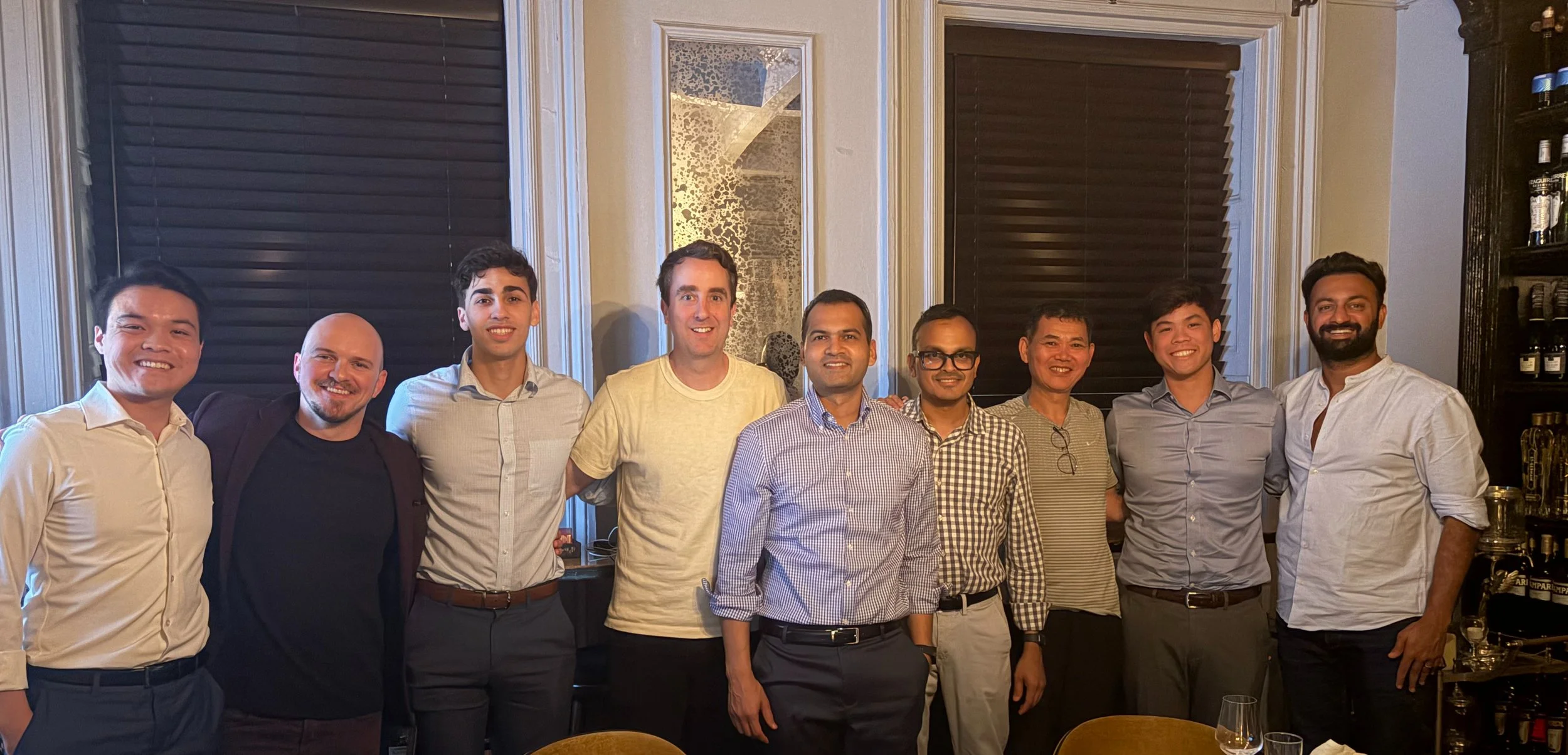
Over the past few weeks, along with coaching individual clients, I facilitated a session with a technology leadership team at a Fortune 5 company, coached the executive team at a fast-growing Series B fintech company, and hosted an executive roundtable dinner in New York with senior professionals spanning finance, AI, technology, and professional services.
I thought it would be useful to share a few of the takeaways from those engagements, which encapsulate the primary learnings from across these high-stakes sessions.
☕ A Cup of Coffee
Technical excellence and corporate training teach professionals how to execute processes. However, complex environments require senior leaders to know how to think and act across ecosystems and various stakeholders.
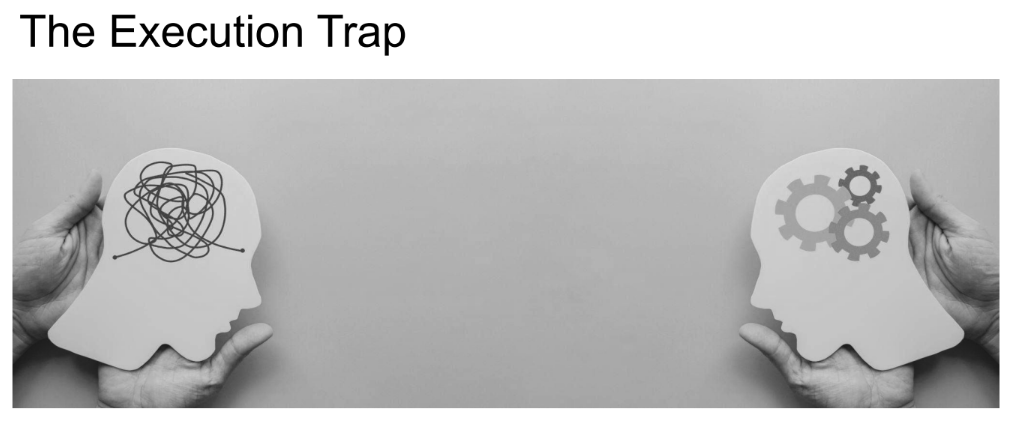
It is easy to look like a leader, say the right buzzwords, and point to process charts. But when an organization hits inflection points of complexity, execution-level habits inevitably break down. Leading through complexity demands that we understand exactly how we think and act under pressure. True scale requires a psychological shift from managing tasks to commanding rooms and making high-stakes strategic judgments when everything is on the line.
🍷 A Glass of Wine
The Systemic Reality: Corporate Gridlock vs. Realigned Strategy
To ground our latest roundtable, I unpacked a raw case study from an active Deep Lake engagement coaching a C-suite leadership team led by a second-time founder CEO at a fast-growing fintech company.
While the business possessed fundamentally sound banking technology, a flagship implementation moving $2 billion a month across 25 million accounts, and major venture capital backers, the organization ground to a halt under the weight of scaling complexity. Financial stress quickly fractured team accountability, causing the C-suite to step out of their strategic executive roles and down into tactical firefighting.
To unlock growth, we mapped the reality and aggressively realigned the entire organization around a standardized Revenue Game, dropping custom client requests to protect engineering capacity:
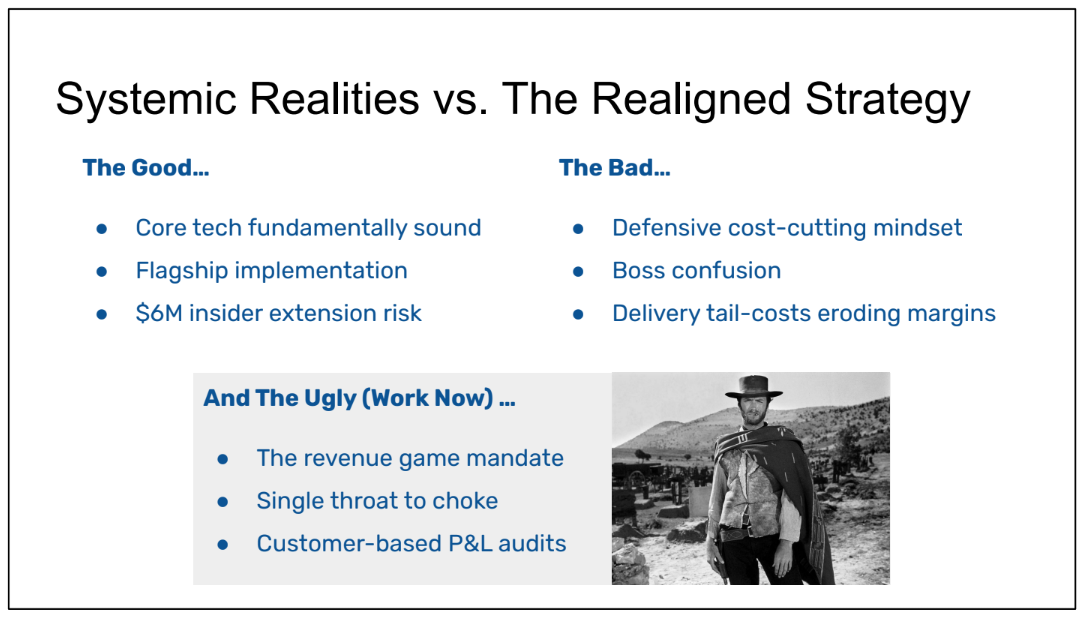
The Good: Fundamentally sound core tech with a verified flagship implementation.
The Bad: A defensive cost-cutting mindset, delivery tail-costs eroding margins, and pervasive boss confusion.
The Ugly (Work Now): A $6M insider extension, a strict revenue game mandate, a single throat to choke, and customer-based P&L audits.
The Realignment Architecture:
Commercial Single Owner (Sales): The CRO was handed 100% accountability for both new revenue and existing client expansion, forcing him to own the accounts he claimed to know best.
Operational Single Owner (Delivery): The Chief Client Officer took over full delivery and flattened reporting lines so mid-level execution leads had exactly one boss.
The Operational Backstop: The COO/CFO layer was pulled out of tactical delivery and re-oriented around customer-by-customer P&L audits to isolate exactly which client banks were leaking engineering resources.
💡 Coaching Insights of the Month
#1 The Alignment Game
Most business books focus on high-level strategy or individual success. This is about how organizations actually function under pressure. Work becomes a grind when talented companies drift into confusion, bureaucracy, and internal friction.
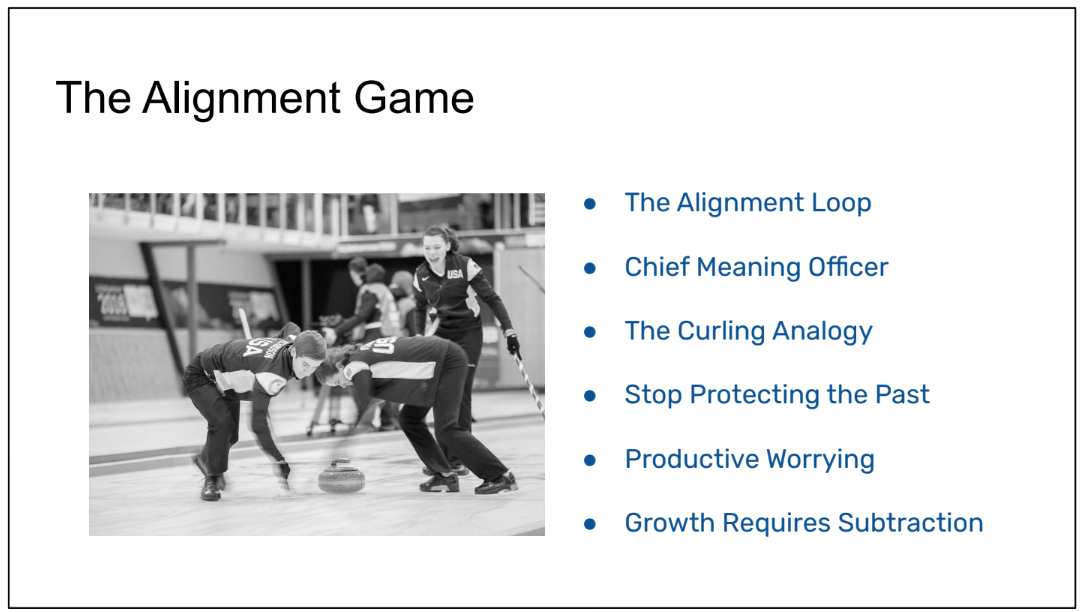
Alignment is Your Primary Responsibility: True alignment connects three things: Mission (where the company is going and why it matters), Behaviors (how people think, communicate, and operate), and Consequences (ensuring incentives, promotions, and bonuses actually reinforce those behaviors). Organizations become what they reward.
The Chief Meaning Officer: Inject purpose daily. As complexity rises, your job is to help people understand where the organization is going and why their specific work contributes to it. When communication stops, cynicism and politics expand. Meaning is operational fuel.
Remove Friction (The Curling Analogy): Think of Olympic curling. The team pushes the stone; they own the execution. The leader's job is to run ahead with the broom and sweep the path. You aren't controlling every move or creating dependency—you are removing obstacles, increasing clarity, and protecting momentum.
Stop Protecting the Past: Kill the attachment. Companies get stuck because of an emotional attachment to old structures, old incentives, and old ways of operating. Continuous growth requires uncomfortable honesty and an external perspective.
Worry Productively: That "uh-oh" feeling in your stomach usually matters. Don't suppress or rationalize problems. Investigate weak signals early—across hiring, client relationships, or strategy—while the problem is still small and manageable.
Growth Requires Subtraction: Focus talent. Do not try to be everything to everyone. Strategic focus means concentrating resources, focusing top talent on a few critical opportunities, and simplifying execution. Focus is about subtraction, not expansion.
#2 Leading Through Chaos
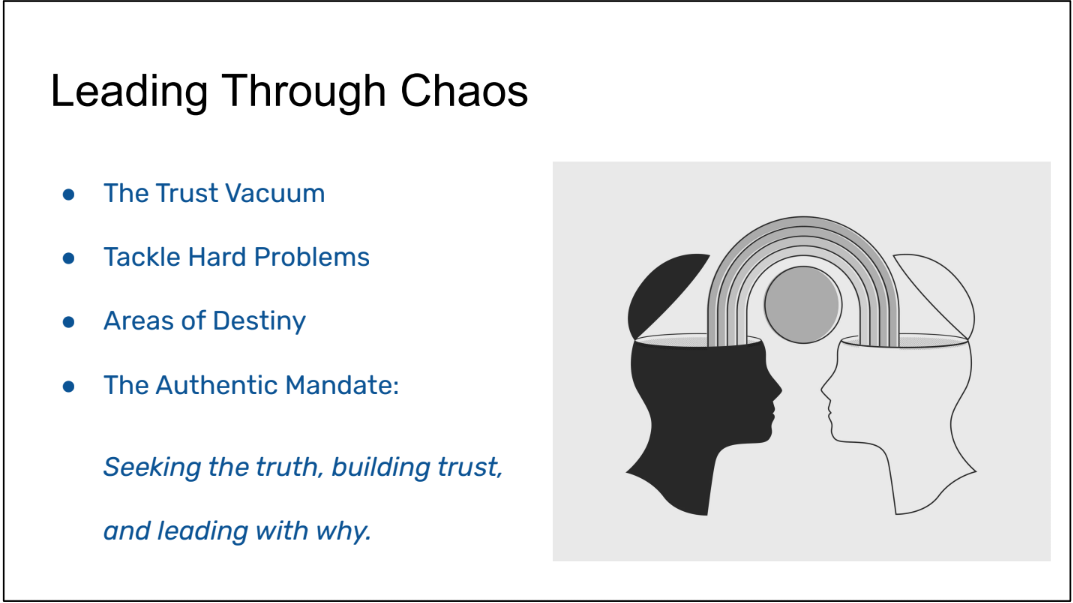
The Trust Vacuum: Jim VandeHei from Axios highlights that we are part of a rattled generation hit by three historic shocks: social media anxiety, COVID isolation, and the sudden explosion of AI.
Human beings are not wired for the current technological velocity, but choosing which scenario happens to you—AI amplifying your expertise versus commodifying it—is not up to the technology.
Many senior executives remain silent on AI because they are confused themselves. Silence breeds cynicism and fear. Teams thrive when leadership speaks plainly, equips them with training, and maps out an honest path to redeploy resources.
The Human Premium: As Wall Street leaders like David Solomon highlight, when technical process execution gets commoditized by AI, the human premium shifts entirely. Your value scales on your strategic judgment, your ability to identify the right questions to ask, and the right problems to go after.
Tackle Hard Problems: This is how you build that premium. Jack Welch argues that career credibility does not come from visibility alone. High performers build real authority by volunteering for difficult assignments and taking ownership under pressure. Credibility compounds through hard situations handled well.
Find Your Area of Destiny: Long-term career success sits at the exact intersection of two things: what you are genuinely good at, and what deeply energizes you. Without both, senior professionals face burnout or mediocrity. This is critical for reinventing your leadership identity.
The Authentic Mandate: Navigating this disruption requires strong character-based leadership. Ceaselessly look for the truth in the details, relentlessly build trust, and always explain the why behind decisions to give people's work meaning.
▶️ Forward the Action
Insight without action fades, and commitment is what creates true accountability. Take a few minutes to step away from the day-to-day grind and run an unfiltered baseline audit on your current execution:
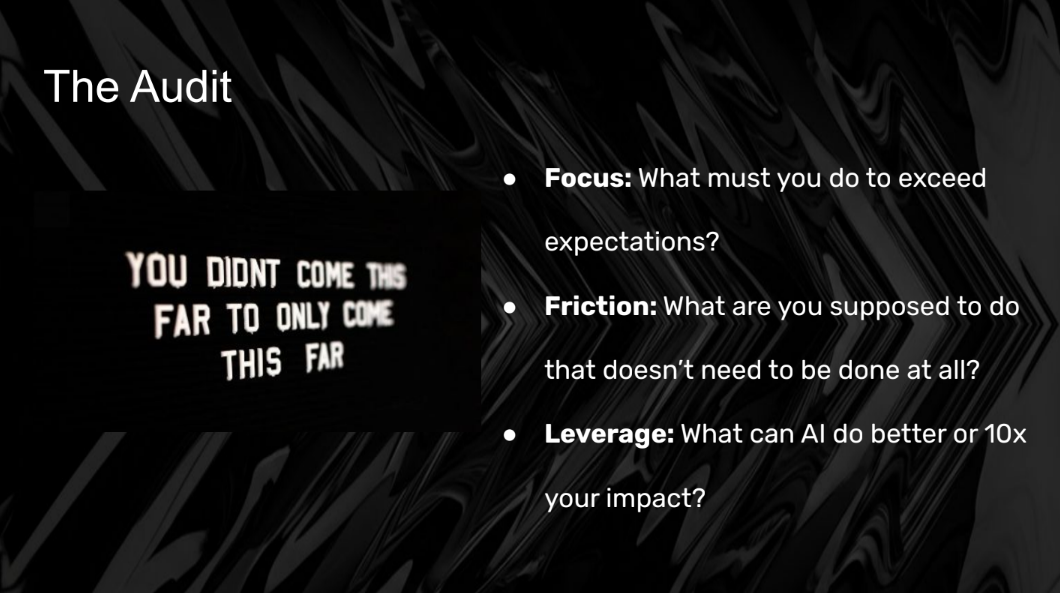
As you look at your calendar and priorities for the upcoming week, keep this anchor standard in mind: If you are saying yes to something, what you are saying no to is equally important.
📚 Three Small Sips to End the Month
You can access all these insights and more on Deep Lake Echo.
Case Study: Transforming Corporate Alignment — Read the full Walmart Leadership Workshop Blog
Playbook: Strategic Roadmap For the CFO Transition — Read and listen to the Interview with CFO Briefing Memo
A Reflection: Enterprise leadership sits at the intersection of bold human execution and market value creation. Sweep the path, remove the friction, and let your team run.
If these ideas and real-world lessons shaped through my experience and client work are relevant to where you are, feel free to reply directly. I’m glad to continue the conversation.