The Technical Ceiling From Explanation to Meaning
In enterprise environments, strong thinking fails most often not because the data is flawed, but because it is incorrectly framed for the executive audience. Technical experts routinely default to an academic defense—diving deep into analytical complexity to prove rigorous execution. At senior leadership levels, this approach creates information drag rather than accelerating quality choices.
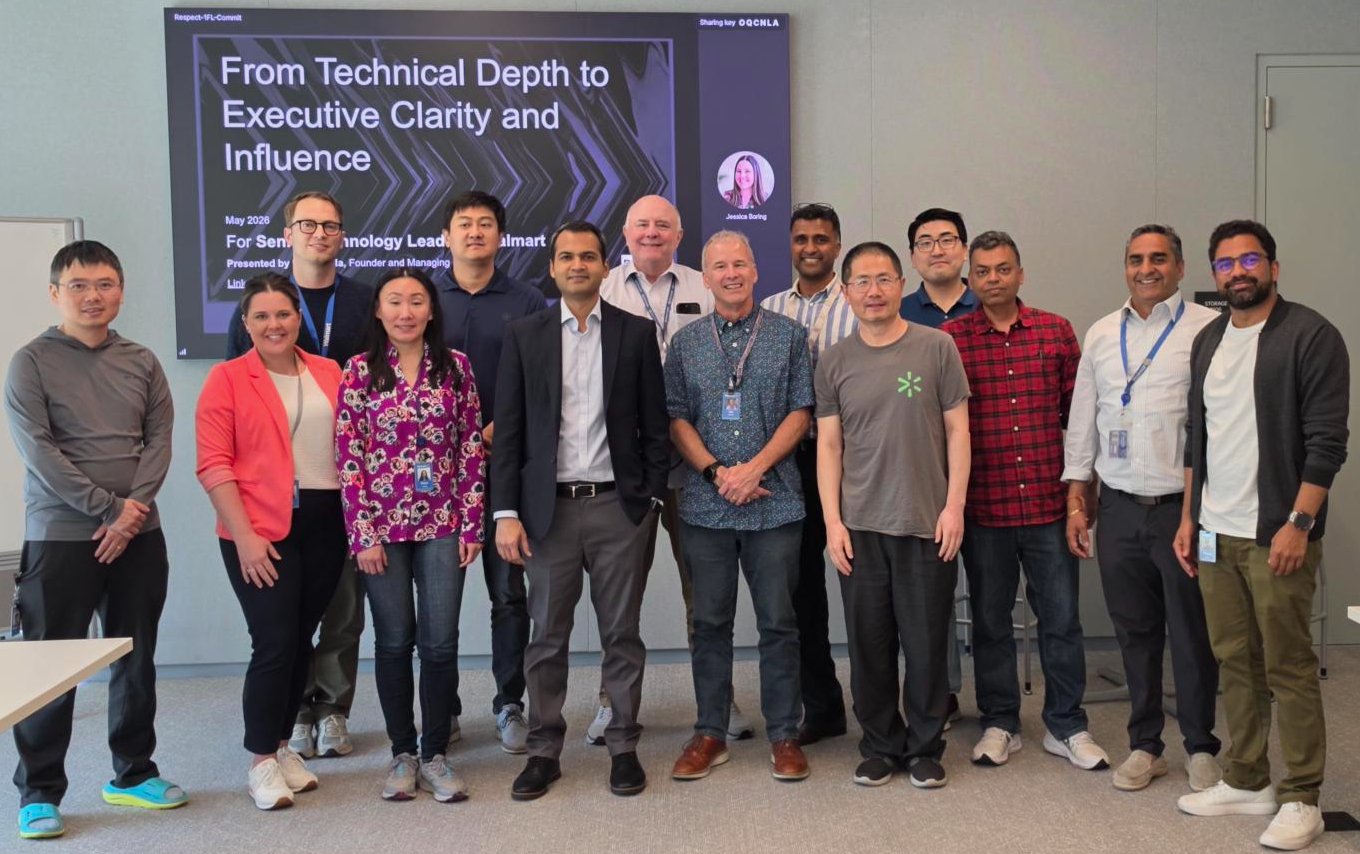
Last week, Deep Lake facilitated a Leadership Workshop for the Applied AI senior management team at Walmart. The core focus of the cohort was navigating a critical career pivot: moving from technical depth to strategic influence.
The Core Friction: Academic Defense vs. Quality Decisions
When technical leaders report to the C-suite or cross-functional board members, a natural disconnect occurs. The specialist wants to explain how the engine works to validate their seat. The executive simply needs to know where the engine is taking the business and what risks threaten the timeline.
Explanation is comfortable. It relies on absolute variables, historical data, and systemic processes.
Leadership requires meaning. It requires translating those technical variables into enterprise outcomes, capital efficiencies, and operational risk mitigation.
When a technical driver fails to make this shift, they remain categorized as an execution resource rather than a strategic partner.
The Framework for Strategic Driver Status
To establish true market authority and command the boardroom, technical leaders must restructure their communication architecture around decision rhythms:
Lead with the Macro Impact: Frame every update around its direct contribution to the firm's broader commercial or operational KPIs.
Enforce Structural Boundaries: Eliminate administrative data-dumping. Filter out technical complexity until it is explicitly requested during due diligence.
Own the Outcome, Not Just the Process: Shift the narrative from tracking project milestones to defending strategic recommendations.
During the session, the Walmart cohort actively deconstructed these barriers, walking away with applicable behavioral frameworks to optimize their day-to-day operations. When technical leaders transition from process executors to strategic drivers, organizational complexity decreases, and velocity increases.