Why does The Godfather still hold our attention decades later? A Cup of Coffee | A Glass of Wine - March 2026 Edition
Why does The Godfather still hold our attention decades later?
Over the past couple of weeks I facilitated a leadership session with a technology leadership team at a Fortune 5 company and hosted an executive roundtable dinner in New York with senior professionals across investment banking, private equity, and corporate leadership. I thought it would be useful to share a few of the ideas from those conversations directly.
☕ A Cup of Coffee
Strong thinking often fails to land not because it is wrong, but because it is not framed for the room.
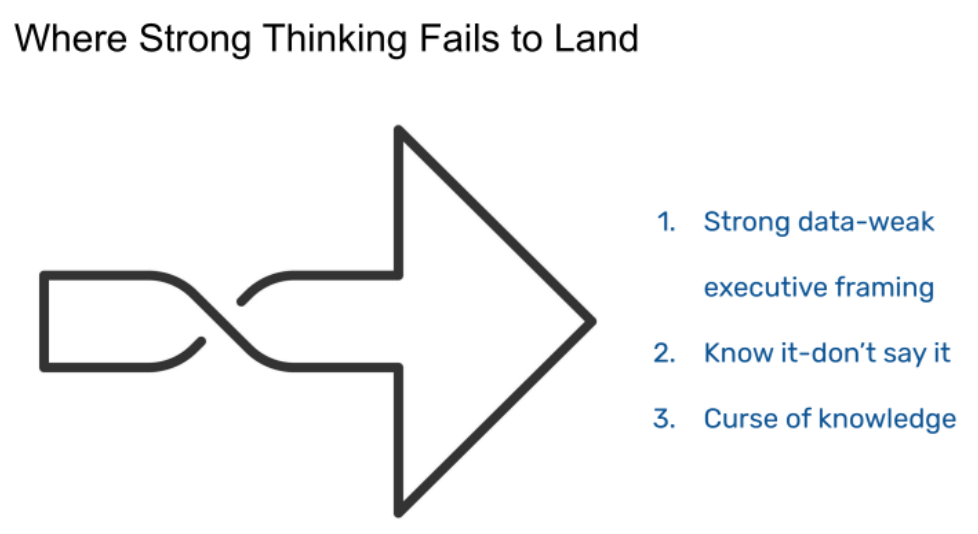
Three patterns show up repeatedly in senior environments.
Strong data, weak executive framing
When framing is weak, others fill the gap. Over time, trust erodes quietly.
Know it, don’t say it
Silence or over-processing means decisions move without you.
The curse of knowledge
Explaining instead of leading reduces speed and diffuses influence.
This is often where the transition from technical expertise to leadership begins.
🍷 A Glass of Wine
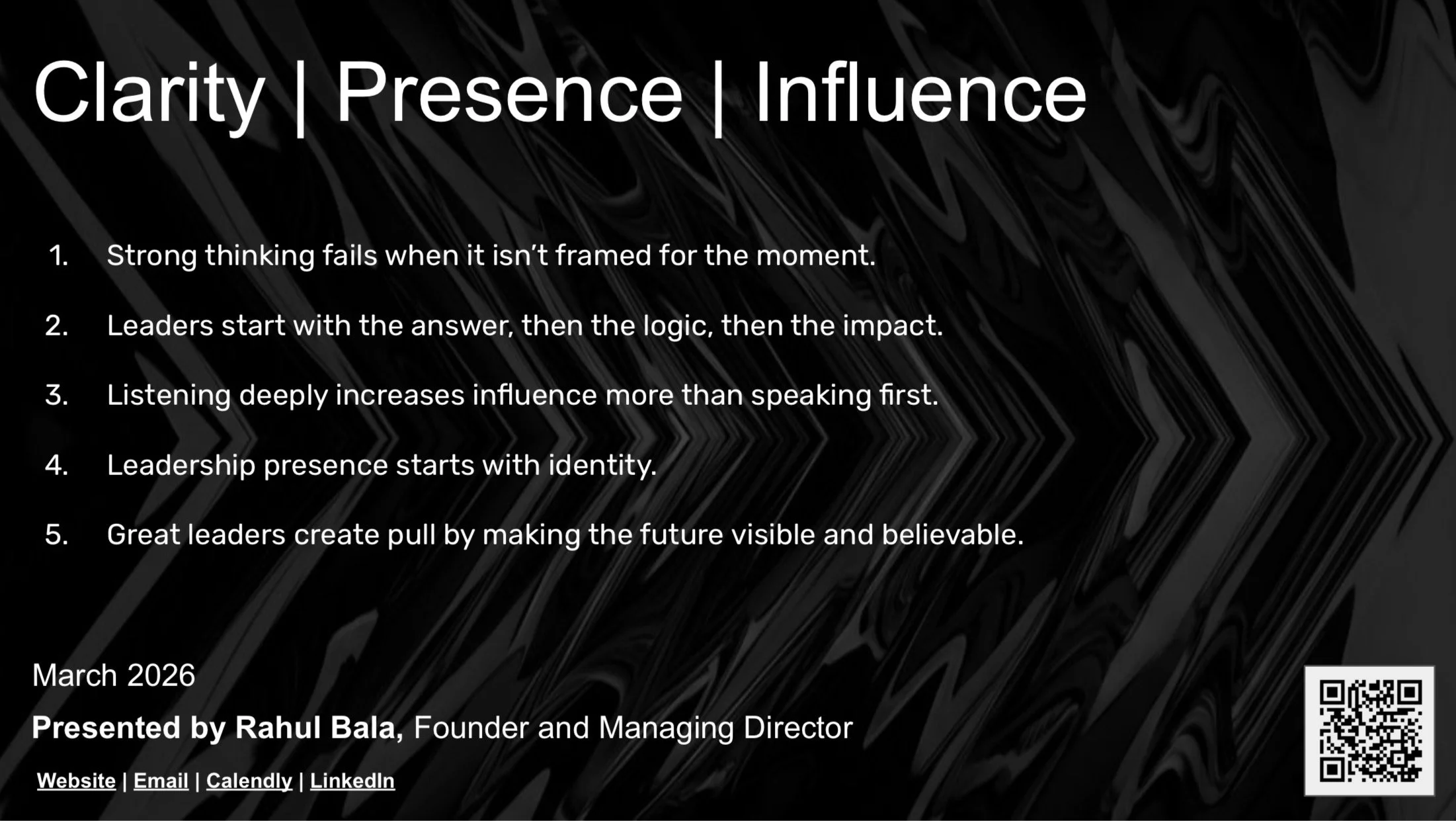
Across both conversations, we kept returning to three capabilities that move someone from technical excellence to trusted strategic influence.
Clarity. Presence. Influence.
Individually they matter. Together they shift how a professional shows up in senior rooms.
A single clearer thought or sentence can change the direction of a meeting. Over time those moments compound.
The transition happens not through more expertise, but through better framing of that expertise.
💡 Coaching Insight of the Month
#1 Explanation Is Comfortable. Leadership Requires Meaning.
One of the most practical shifts we discussed is the difference between explanation and leadership framing.
Operators often default to explaining their work. Leaders focus on the meaning of the work.
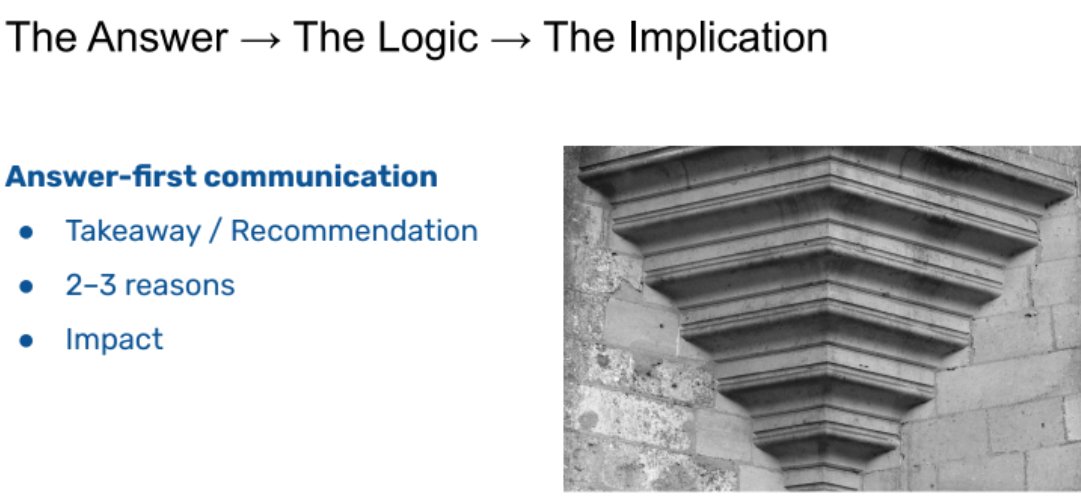
This is why strong communicators often use an answer-first structure.
The Answer → The Logic → The Implication
State the recommendation. Explain the reasoning. Clarify the impact.
If the takeaway does not appear early in the conversation, many listeners assume it does not exist. Leaders listen for judgment first, not analysis.
#2 Listening and Identity
Many senior leaders speak less in meetings not because they know less, but because they listen differently. Three levels of listening show up in most conversations.
Level 1: Internal listening — focused on our own response.
Level 2: Focused listening — hearing the facts being shared.
Level 3: Global listening — understanding the broader system, trade-offs, and implications.
Influence tends to increase as leaders spend more time in the second and third levels. When people feel deeply heard, resistance drops and conversations / decisions move faster.
Presence often begins there. But it also flows from identity.
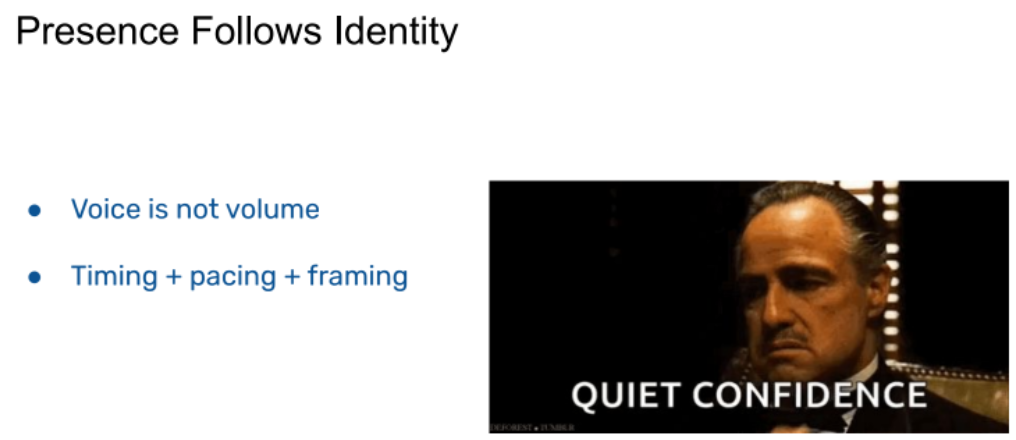
How you see your role determines how others hear you.
If you have ever wanted a seat at the table, a useful question is: “Why am I really here?” Identity shapes whether others experience you as an enabler, an operator, or a thought partner.
Part of what makes The Godfather compelling is that the characters are anchored in a clear value system, however flawed or dangerous it may be. Loyalty, family, reciprocity, and duty are visible in their decisions.
In leadership, what you stand for also becomes visible quickly through your words and actions. People read your values long before you state them.
#3 Influence Is Clarity × Presence × Relevance
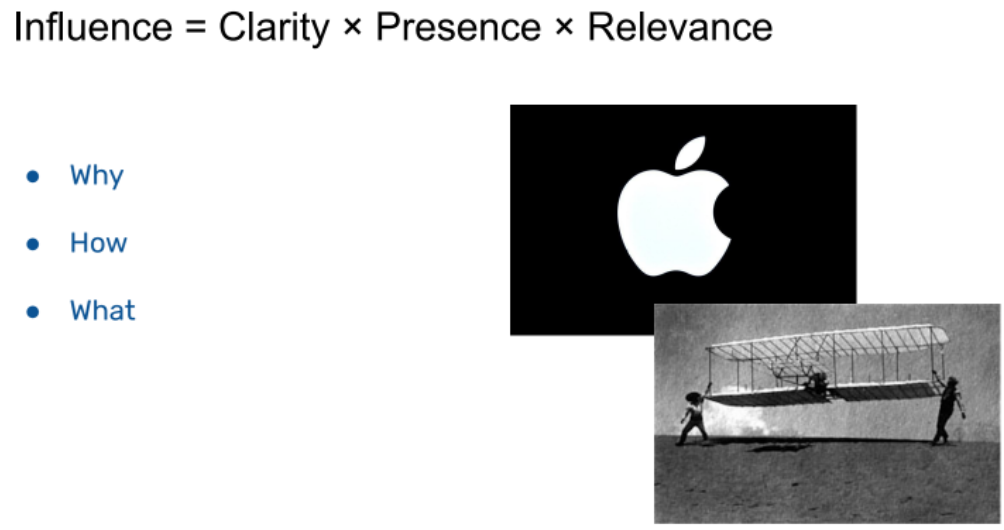
Influence is rarely persuasion in the traditional sense. It is helping others act on something they already sense might be true. In practice, influence tends to emerge when three elements align.
Clarity — the decision is visible.
Presence — the leader communicates with composure.
Relevance — the message connects to the enterprise’s why and desired outcomes.
This is also where storytelling becomes powerful, though that is a topic for another time.
Great leaders often do two things simultaneously. They show people clearly where we are today, and they help them imagine what is possible next. That contrast creates pull.
▶️ Forward the Action
None of the leaders in the room lacked expertise, and neither do you. The real question is how that expertise translates to influence. Insights like these fade quickly without action. Build them into your day-to-day work with consistency and accountability, and the effects will compound over time.
If this theme resonates with where you are in your leadership trajectory, I would be interested to hear where you see this transition showing up in your work.
📚 Three Small Sips to End the Month
📘 Book: The Stoic Habit – Bob Robinson
A practical reflection on character, judgment, and decision-making under pressure. Read my book summary and leadership takeaways here.
📺 Video: How to Own Your Power at Work – Carla Harris
You must actively shape the narrative of your value. Sponsorship, not just mentorship, is essential for promotion. Read my resource around navigating your leadership trajectory here.
🕉 Sloka:
दृष्टिपूतं न्यसेत्पादं वस्त्रपूतं जलं पिबेत् ।
शास्त्रपूतं वदेद्वाक्यं मनःपूतं समाचरेत् ॥
Move only once your path is cleared by vision, and accept only what has been filtered for truth. Speak words grounded in proven wisdom, and let your final actions be governed by an unwavering internal compass.
Elite leadership is built when decisions are filtered through clarity, sound judgment, and integrity.
Thank you to those who joined these sessions. For those who missed them, I look forward to seeing you next time.