
The Natural Talent Trap: Why Success Makes Leaders Uncoachable | September 2026 Edition
"The heights of your achievement are directly proportional to your curiosity toward the elements of your role that truly challenge you."
☕ A Cup of Coffee
A raw theme emerging across my recent client, management team, and board discussions is this: early in your personal life and professional career, feedback is constant. But as you grow older and become a senior executive, the higher you rise, the more insulated you become.
You reach a point where the natural talents and successes that earned you the seat suddenly become your primary evidence against needing to change.
In highly complex, high-stakes environments, leaders hit a ceiling where sheer effort and technical brilliance are no longer enough to scale their influence. But because they are surrounded by people who soften the message, they often don't realize they have stalled until the friction becomes irreversible. You stop getting the clean, unvarnished truth precisely when you need it most.
🍷 A Glass of Wine
So how does someone reach their highest potential once they are already at the top?
Ric Bucher, a veteran sports analyst, spent decades studying elite athletes to find the factor that helped the greatest performers reach their highest potential. His core conclusion: be Coachable.
In business, many leaders say they want feedback. Far fewer can actually receive it without instantly defending, minimizing, rationalizing, or quietly dismissing it.
The defining trait of elite performers is that they do not merely tolerate coaching, they develop an active, hungry appetite for finding challenges where they are likely to be stretched and maybe even fail. They understand that failure or strong feedback is raw information, not an indictment of their identity. They do not tie their self-worth strictly to their results; they think of themselves as whole people and see value in the messy process of realizing their best version.
True coachability is not passive compliance. It is an active, collaborative synthesis between a leader's personal aspirations and an external guide's objective vision of their untapped potential. Achieving peak performance requires balancing confidence (belief in one's capacity) with humility (recognition of one's limitations). Without that balance, talent creates an artificial ceiling, turning natural strengths into crutches that mask critical vulnerabilities.
💡 Coaching Insight of the Month
1. Status quietly reduces learning speed.
Under pressure, people rarely rise into perfect openness; they default to their trained habits. If your normal habit is defensiveness, stress will amplify it. The most practical leadership lesson is to actively build a feedback environment and a trusted advisory/coaching relationship long before a crisis forces you to.
2. Harmonious vs. Obsessive Passion.
Harmonious passion is driven by an intrinsic love for the craft, fostering resilience, adaptability, and long-term sustainability. Obsessive passion is driven by extrinsic validation and outcome-fixated results, frequently leading to burnout, anxiety, and brittle performance.
3. Decoupling Identity & The Federer Proof.
Athletes and executives suffer acute distress when their self-worth is entirely tied to professional output. The person must always be broader than the role. Elite performance doesn't require flawless execution, as Roger Federer's 54% point-win ratio but 80% match-win ratio proves. It demands an immediate mental reset: forgetting the previous error and focusing entirely on the next action.
▶️ Deepen the Insight and Forward the Action
Watch what happens in your body and mind the next time a peer, client, or board member questions your judgment.
The Feedback Rule: Before you launch into explaining or defending your position, force yourself to ask two clarifying questions:
Did I miss a piece of context that changes the picture?
What specific outcome are you optimizing for that my approach doesn't address?
Separate Tone from Content: Disregard the communication style of the source. The delivery might be messy, overly blunt, or poorly timed, but the insight may still be incredibly valuable. Mature leaders extract the actionable signal without demanding perfect packaging.
Step Back to Fix Core Flaws: Continuing to operate with a known structural flaw compounds risk. Temporarily reducing output to rebuild a core skill yields exponential long-term returns.
Conserve Emotional Energy: Avoid extreme physiological swings from wins or losses. Counteract the brain's natural fight-or-flight stress response under pressure by consciously anchoring yourself in gratitude for the opportunity and conserving steady energy for a sustained career.
📚 A Few Small Sips to End the Edition
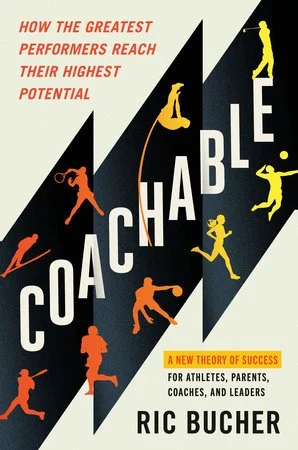
📘 Book: Coachable: How the Greatest Performers Reach Their Highest Potential — Ric Bucher
A compelling field report on what separates high performers who keep evolving from those who plateau once status / natural talent starts protecting them from discomfort.
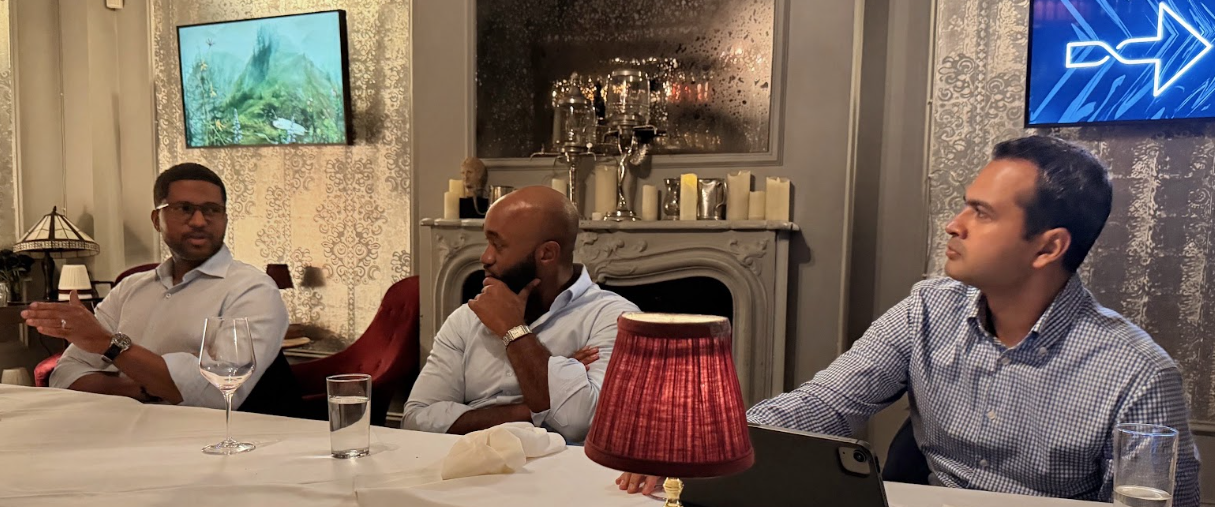
🏙 The NYC Executive Dinner (September 15) We recently wrapped up our third private executive dinner in New York. The willingness of these incredibly successful executives, investors and advisors to drop the corporate armor and engage in an open discussion was exceptional. The core takeaway from the table: None of you are in the room because you lack expertise. The real question is how your internal architecture turns that expertise into trusted enterprise influence.
Link: Read the full NYC Dinner recap, presentation, and photos here
If these ideas and real-world lessons shaped through my experience and client work are relevant to where you are, feel free to reply directly. I’m glad to continue the conversation.
